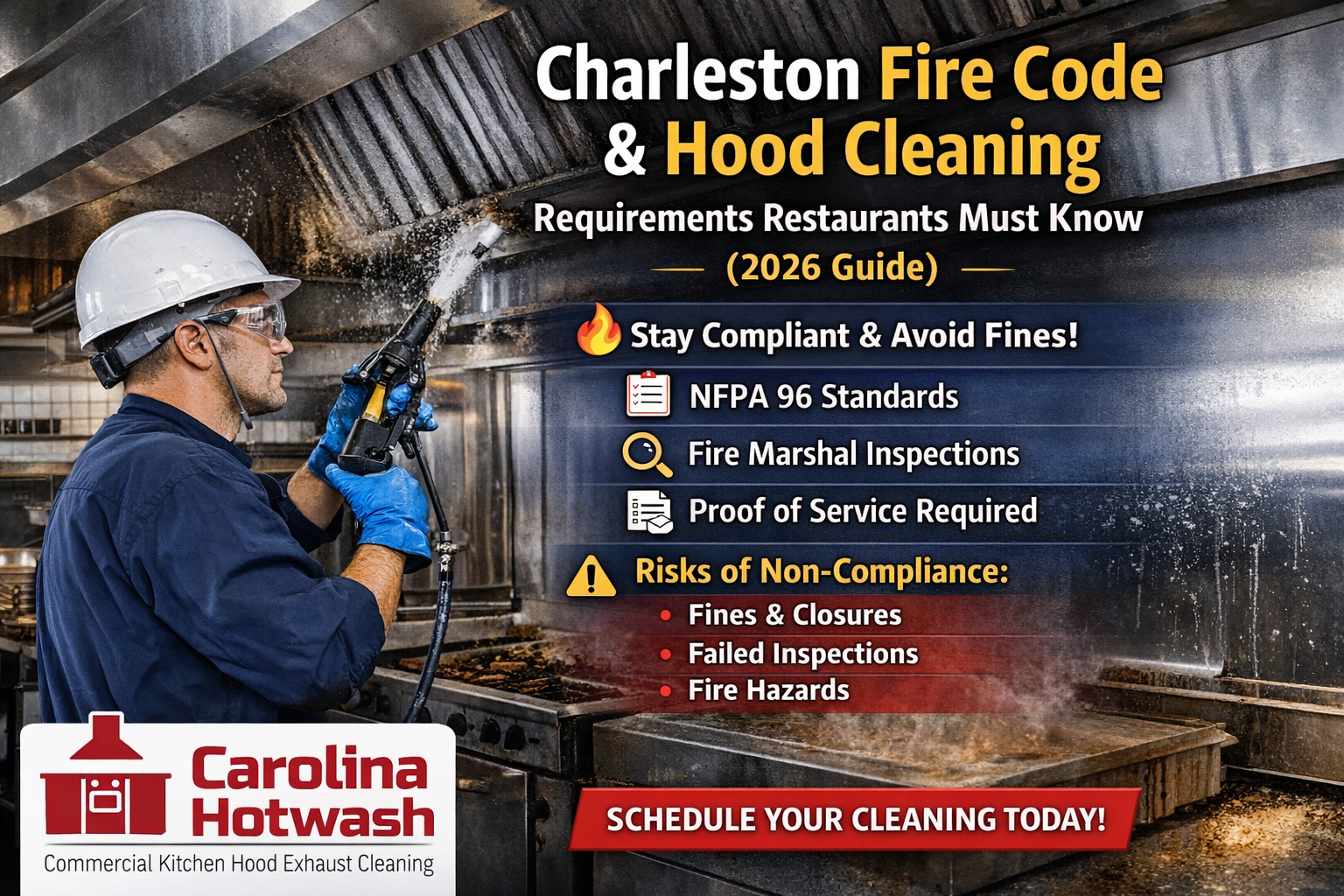
Charleston Fire Code & Hood Cleaning Requirements Restaurants Must Know (2026 Guide)
Charleston Fire Code & Hood Cleaning Requirements Restaurants Must Know (2026 Guide)
Running a commercial kitchen in Charleston comes with strict fire safety responsibilities — and your kitchen hood and exhaust system is one of the most heavily regulated components.
Failure to stay compliant doesn’t just risk a failed inspection. It can lead to fines, forced shutdowns, denied insurance claims, or even a kitchen fire.
This guide breaks down Charleston fire code hood cleaning requirements, how often you need service, and what local restaurant owners need to know heading into 2026.
Why Hood Cleaning Is Enforced So Strictly in Charleston
Charleston follows NFPA 96, the national fire code standard governing commercial kitchen exhaust systems. Because of the city’s dense historic districts, high restaurant volume, and older buildings, fire marshals take hood compliance seriously.
Grease buildup inside hoods, ducts, and exhaust fans is one of the leading causes of restaurant fires nationwide. Even small amounts of grease can ignite rapidly under high heat.
That’s why Charleston fire inspectors don’t just check your hood — they check cleanliness, documentation, and service frequency.
Charleston Hood Cleaning Frequency Requirements (NFPA 96)
Your required cleaning schedule depends on how much grease your kitchen produces, not just how often you cook.
Typical Cleaning Frequencies
Every 3 months
High-volume kitchens
Fryers, charbroilers, wood-fired ovens, or wok cooking
Every 6 months
Moderate-volume restaurants
Limited frying or grease-producing equipment
Every 12 months
Low-volume kitchens
Churches, seasonal kitchens, or light cooking only
🔥 Important: Charleston inspectors can require more frequent cleaning based on what they see during an inspection — even if you’re technically “on schedule.”
What Inspectors Look for During a Charleston Fire Inspection
When the fire marshal inspects your kitchen exhaust system, they typically check:
Hood interior cleanliness (no grease film or buildup)
Exhaust duct accessibility and condition
Exhaust fan blades and housing
Proper grease containment on the roof
Access panels installed where required
Service documentation (this is critical)
If grease is visible or records are missing, you can fail — even if your last cleaning wasn’t long ago.
Documentation Requirements: What You Must Have on Site
Charleston requires proof that your hood system was cleaned by a qualified professional.
After service, you should receive:
A service report showing:
Date of cleaning
Scope of work (hood, ducts, fan)
Before/after condition
A compliance sticker or tag placed on the hood
Records kept on site and available during inspection
Missing paperwork is one of the most common reasons restaurants fail inspections — even when the system is clean.
What Happens If You’re Not Compliant?
Non-compliance can lead to:
Failed fire inspection
Re-inspection fees
Fines or citations
Forced cleaning on a short deadline
Temporary closure in serious cases
Insurance claim denial after a fire
The cost of staying compliant is far lower than the cost of emergency service or lost business.
Does Charleston Require IKECA Certification?
While IKECA certification is not always legally required, many inspectors strongly prefer — and sometimes expect — service from trained, certified professionals. Certain city’s within Charleston require it, such as North Charleston.
Working with a company that understands NFPA 96, Charleston fire code expectations, and proper reporting reduces risk and protects your business.
How Carolina Hot Wash Helps Charleston Restaurants Stay Compliant
At Carolina Hot Wash, we work with restaurants across Charleston, North Charleston, Mount Pleasant, Summerville, and the Lowcountry to keep kitchens safe and inspection-ready.
We provide:
NFPA 96–compliant hood, duct, and fan cleaning
Detailed service documentation
Compliance stickers and reports
Honest frequency recommendations (no overselling)
Flexible scheduling for busy kitchens
Our goal isn’t just cleaning — it’s keeping you open, compliant, and protected.
Schedule Your Hood Cleaning Before Your Next Inspection
If you’re unsure whether your kitchen is compliant — or if an inspection is coming up — don’t wait.
📞 Contact Carolina Hot Wash today to schedule a professional hood cleaning or compliance review.
Serving Charleston & the Lowcountry. Trusted by local restaurants.